The Best Attendance Management Software in Pakistan
What separates a system that records attendance from one that actually resolves the exceptions.
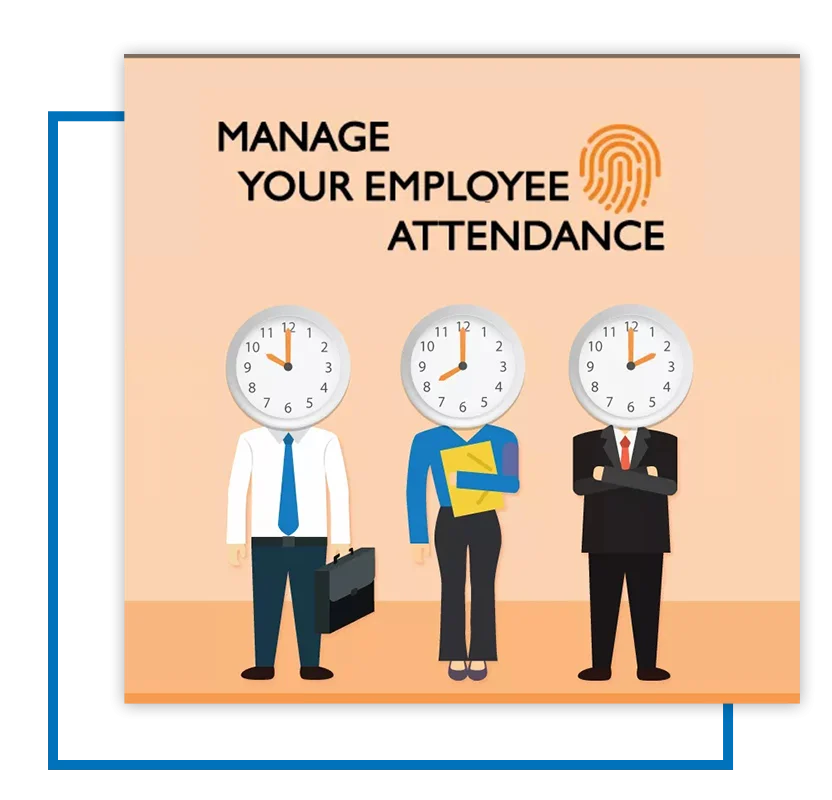
Almost every attendance system on the market can record that someone arrived at 9:02. That part has been solved for twenty years. What separates a system worth buying from one that simply logs punches is what happens on the days when the record is wrong, incomplete, or contested — because those are the days that consume your HR team's month.
This is a guide to evaluating attendance software on the things that actually differ, written for organisations operating in Pakistan.
The exceptions are the product
On a normal day, attendance software does nothing interesting. Someone checks in, someone checks out, the record is clean. If 95% of your days are normal, 95% of the value sits in the other 5%:
- A device failed and a shift has no records at all.
- Someone forgot to check out and the system shows a 16-hour day.
- A field employee was at a client site and never touched a terminal.
- A shift ran across midnight and got split across two days.
- Someone's leave was approved after the attendance was already marked absent.
Every one of these needs resolving before payroll can run. A weak system makes each one a manual investigation. A strong one detects it, routes it to the right manager with the context attached, and records who resolved it and how.
When you evaluate, spend most of the demo here. Ask the vendor to show you the exception queue, not the check-in screen.
Key takeaway
Judge attendance software on how it handles missing and disputed records, not on how it handles clean ones. Every product handles clean ones.
Capture has to match how people actually work
Most organisations of any size need more than one capture method, because they have more than one kind of employee. Forcing everyone through a single mechanism produces either a hardware problem or a compliance one.
| Method | Suits | Watch out for |
|---|---|---|
| Fingerprint terminal | Fixed sites, high throughput | Queues at shift change; worn prints in manual trades |
| Face recognition | Contactless, hygiene-sensitive sites | Lighting conditions; enrolment quality |
| RFID card | Sites already running access control | Buddy punching, unless paired with another factor |
| Mobile, geo-tagged | Field sales, service engineers, drivers | Needs a clear location policy agreed with staff |
The important question is not which one is best. It is whether all of them land in the same record, under the same rules, without a reconciliation step. If mobile check-ins arrive in a separate system that HR merges monthly, you have bought two problems.
Offline behaviour is not a detail
In Pakistan this deserves specific attention. Connectivity at industrial sites is not uniformly reliable, and an attendance device that stops recording when the link drops will lose a shift.
Ask directly: what does the terminal do during a six-hour outage, how much does it store locally, and what does reconciliation look like when connectivity returns? Then ask whether duplicate records can be created in that process, because that is the failure mode that produces payroll disputes.
The policy engine is where the real differences live
Recording time is easy. Interpreting it against your rules is the hard part, and it is where products genuinely diverge. Test the platform against your actual policies:
- Shifts and rosters. Rotating patterns, night shifts crossing midnight, split shifts, site-specific schedules.
- Grace and lateness. Grace periods, cumulative late rules, half-day thresholds, short-hours treatment.
- Overtime. Pre-approval requirements, daily versus weekly thresholds, different rules by employee category.
- Ramadan schedules, applied automatically from the calendar rather than adjusted by hand each year.
- Holiday calendars, including late-announced public holidays and site-specific closures.
Bring your most awkward real policy to the demo — the one with the exception that nobody can quite remember the reason for. How a vendor handles it tells you more than an hour of standard presentation.
It has to reach payroll without a human in between
An attendance system that produces a report which somebody then keys into payroll has solved the easy half of the problem and left the error-prone half in place.
What you want is a direct feed, where approved attendance, overtime and leave flow into the payroll calculation, and where each payroll line can be traced back to the records that produced it. That traceability is what turns a payroll dispute from an argument into a lookup.
If resolving an employee's pay query means opening two systems and a spreadsheet, the integration is not finished.
Questions worth asking in a demo
- Show me the exception queue for a day where a device failed.
- How does a night shift crossing midnight get attributed between two days?
- What happens to attendance already marked absent when leave is approved retroactively?
- Show me a payroll line and trace it back to the underlying punches.
- How is the Ramadan schedule applied, and by whom?
- Which biometric devices do you support natively, and which need middleware?
- Who do we call at 8am on the 1st when the terminal at our main plant is down?
So what is “best”?
There is no single answer, and any article that gives you a ranked list without knowing your shift patterns is selling something. The best system for a single-site services company with fixed hours is not the best system for a manufacturer running three rotating shifts across four plants with a field service team.
What is consistent is the evaluation: match the capture methods to your workforce, test the policy engine against your most awkward rule, verify offline behaviour, and confirm the payroll integration is a feed rather than a report. Get those four right and the shortlist tends to resolve itself.
How to run the comparison yourself
Any list of the best attendance management software in Pakistan, this one included, is somebody’s opinion. What is not opinion is the test you can run against a shortlist in a single afternoon.
Take one difficult month. Pick a period with a public holiday, a shift change and at least one disputed absence, then ask each vendor to process it in a trial. The product that handles your worst month is the one to buy. The demo month is always easy.
Count the hand-offs. From clock-in to a salary figure, how many times does the data leave one system and enter another? Every hand-off is a place where a correction has to be made twice, and where the two copies can quietly disagree.
Ask what happens offline. If any part of your workforce sits on a site with unreliable connectivity, this single answer decides whether the system works for you at all.
Run that test and a shortlist usually reduces itself, without anybody having to argue about feature tables. It is a better guide to the best attendance management software in Pakistan for your organization than any ranking written by somebody who has not seen your shift roster.
To run that afternoon test against ours, attendance sits inside the wider human capital management software — which is what removes the hand-offs the second question asks you to count.