15 Best HR Management System Features
If you are shortlisting HR software, these are the hr management system features that actually reduce delays, corrections and rework.
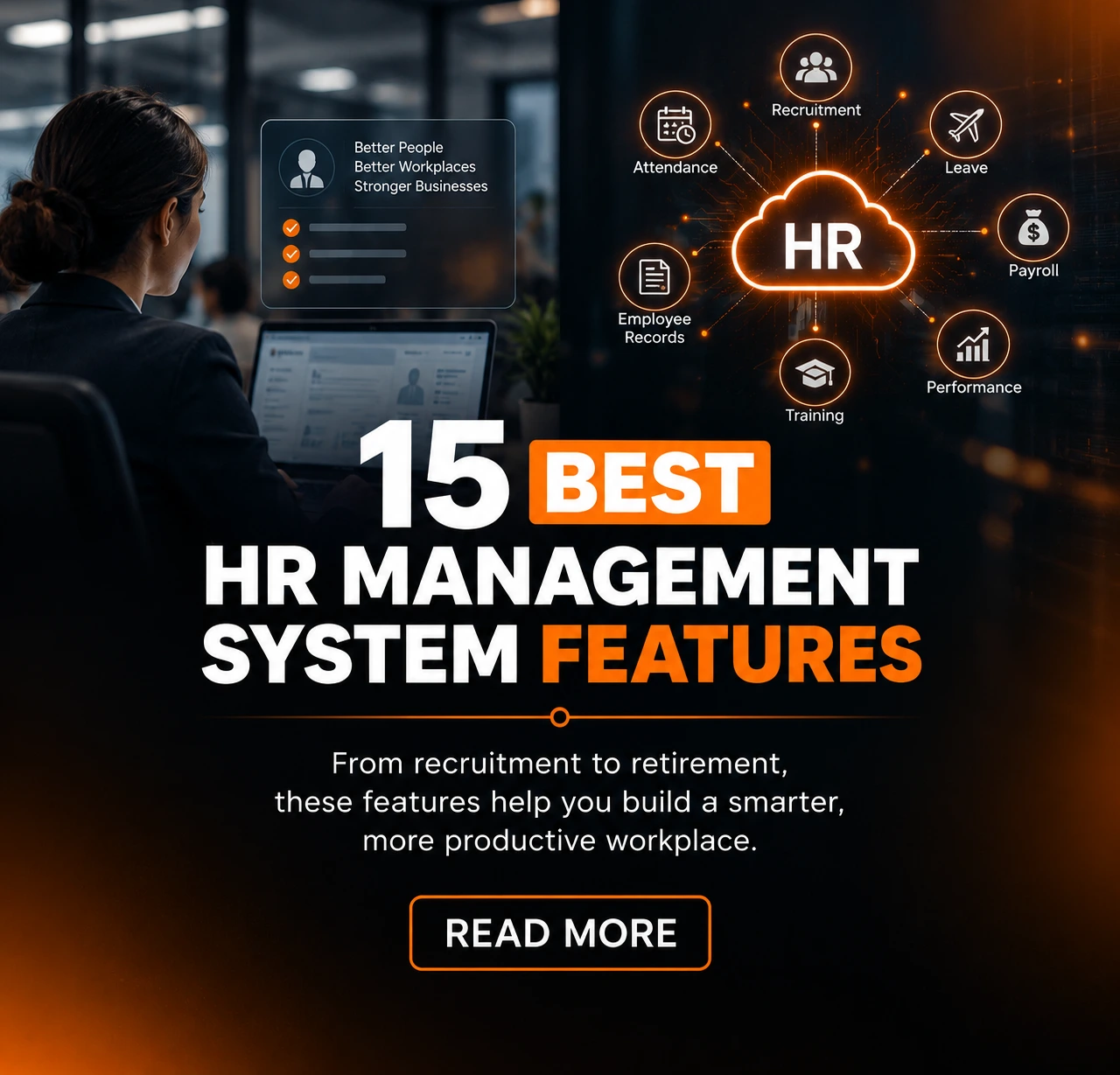
Most feature lists look impressive but do not change daily operations. The useful way to evaluate hr management system features is to ask one question for each item: what queue, error, or manual handoff does this remove? The list below is built around that standard, and each feature is linked to where it usually impacts the business first.
If you want the full context of how these pieces fit together, start with the best HR management system features on one integrated platform and then pressure-test the 15 points below against your own process.
1. Centralized employee master record
A single, trusted profile for each employee removes duplicate data entry across HR, payroll and admin. This is the base layer behind personnel management software and HRIS quality.
2. Attendance and shift rule engine
The system should not only collect punches, it should apply shift logic, grace windows and exceptions automatically. Otherwise your attendance management system still leaves payroll reconciliation manual.
3. Configurable leave policies
Leave types, accrual formulas, carry-forward and encashment need policy-level setup. Strong leave management features prevent month-end disputes before they start.
4. Payroll processing with statutory controls
Payroll must read attendance, leave and allowances from the same record and apply tax and deduction rules consistently. That is the difference between a calculator and real payroll software.
5. Employee self-service (ESS)
Employees should be able to check balances, download payslips and submit requests without raising tickets. This is where ESS capabilities return time to both employees and HR.
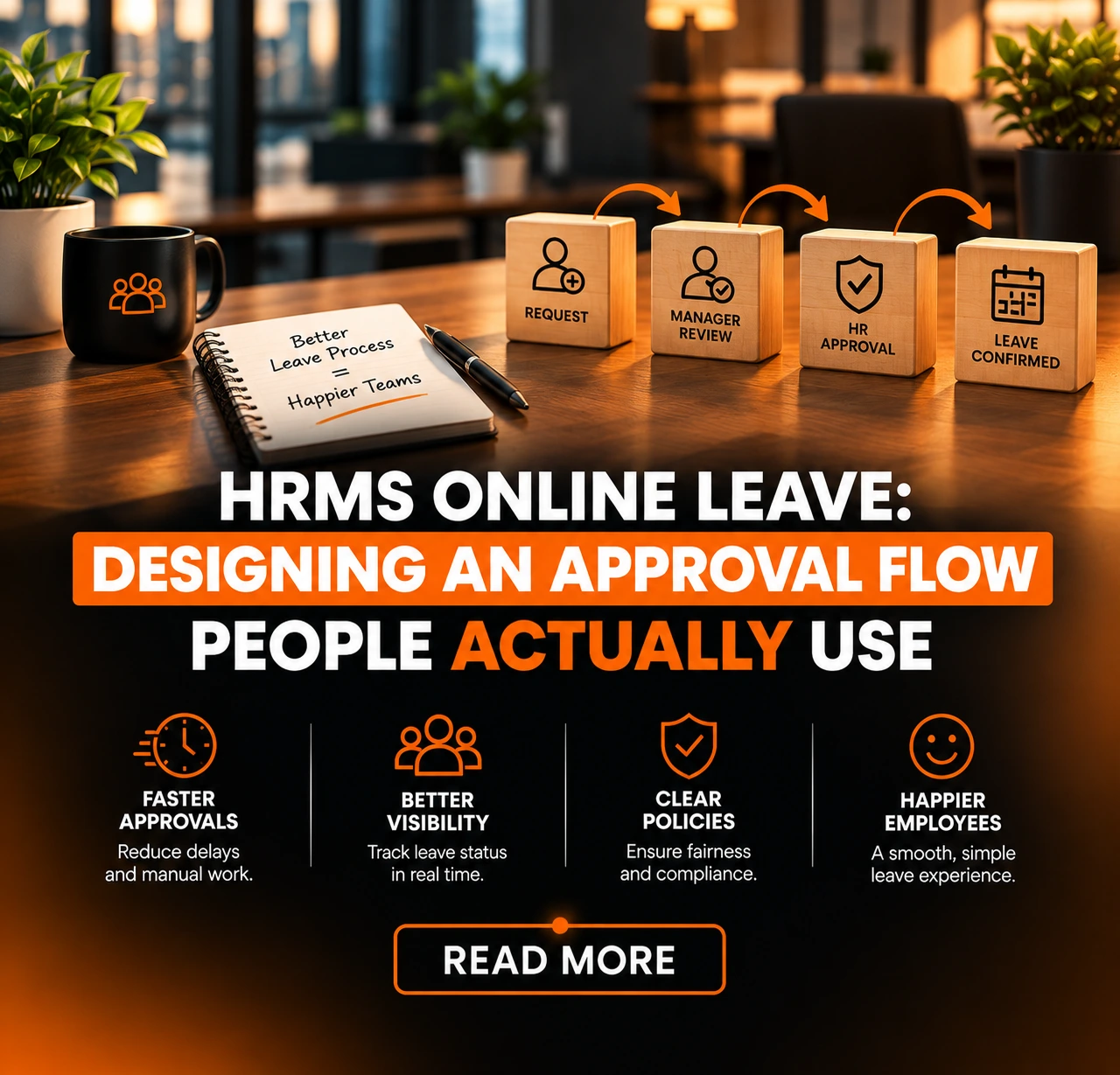
6. Workflow approvals with escalation
Approval routing, delegation and escalation timers turn requests into controlled flows instead of inbox traffic. It is one of the most practical hr management system features for reducing cycle time.
7. Document lifecycle and expiry tracking
Contracts, certifications and policy acknowledgements need version control, renewal alerts and audit history. Look for native document management rather than a file folder bolted on.
8. Recruitment-to-employee handover
When a candidate accepts, onboarding should start without re-keying data. Tight integration with recruitment software removes one of the biggest process breaks in HR operations.
9. Performance and appraisal cycle management
Goal setting, review periods and rating workflows should connect to development and compensation discussions. Mature appraisal management features keep reviews from becoming a yearly form exercise.
10. Training and compliance tracking
Training records need due dates, completion evidence and renewals linked back to role requirements. This is critical where regulatory or safety audits are frequent.
11. Organization structure and role hierarchy
Entities, departments, locations and reporting lines should be master-data driven. Reliable organization management is what makes routing and analytics trustworthy.
12. Workforce planning and manpower visibility
Headcount plans, vacancy status and allocation views help managers act before gaps become overtime spikes. This is the operational side of workforce management.
13. Real-time reporting and dashboards
Dashboards should show actionable trends, not just static totals. Strong reports and dashboards are necessary for HR to move from reactive to preventive decisions.
14. Audit trails and access control
Every sensitive change should be traceable: what changed, when, and by whom. Pairing HR controls with access governance is essential in larger organizations.
15. Integration readiness and API support
The system should integrate with finance, ERP, biometric devices and identity tools without brittle custom work. If integration is weak, your best features still end up trapped in silos.
Shortlisting tip
Prioritize features by operational pain: approval delays, payroll corrections, and repeated employee queries. Those three usually deliver the clearest ROI first.
Feature priority matrix for buying teams
| Feature group | Primary outcome | Who benefits first |
|---|---|---|
| Master data + attendance + leave | Fewer disputes and cleaner inputs | HR operations |
| Payroll + approvals | Faster close, fewer corrections | Finance and payroll |
| ESS + reporting | Lower ticket volume, better decisions | Managers and employees |
Final checklist before vendor selection
Ask each vendor to demonstrate these 15 hr management system features on your exact scenarios, not canned demos. Use your real shift pattern, one real leave policy, and one real payroll edge case. That is how you separate a polished UI from a platform that can run your month end.
For a deeper benchmark, compare your shortlist against this best-hrms-software-system guide and map each feature to a current bottleneck in your process.